
Bilingual nearshore teams for US companies whose support operation is judged on resolution rate and on what happens to a customer after a bad week.
A customer experience engagement is assembled from service lines. These are ours.
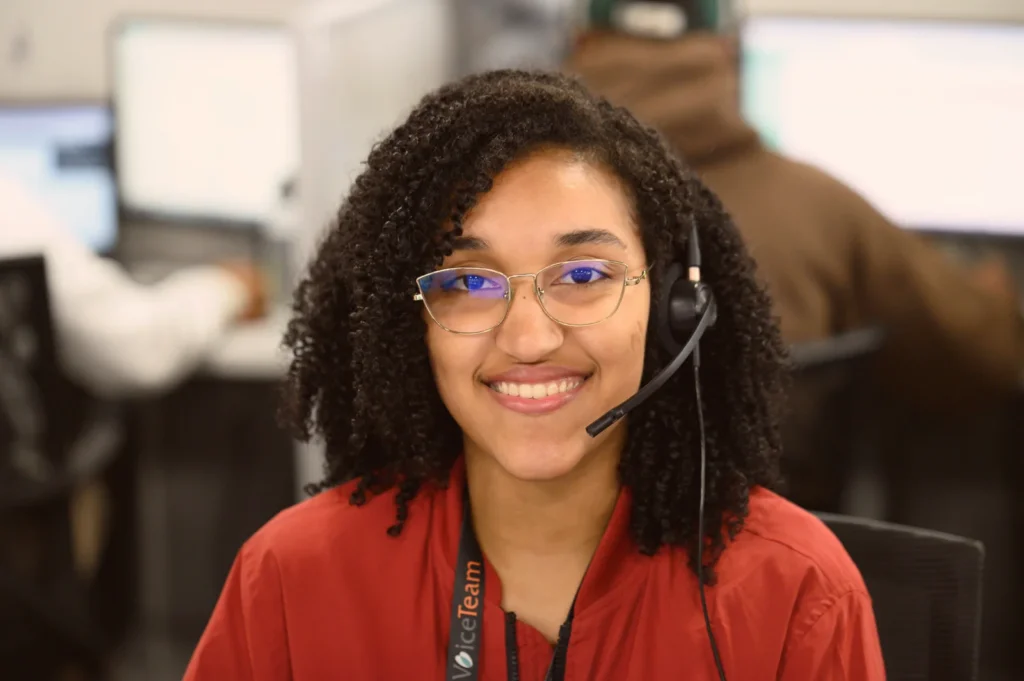
Inbound and outbound support across voice, chat and email, staffed to your hours.
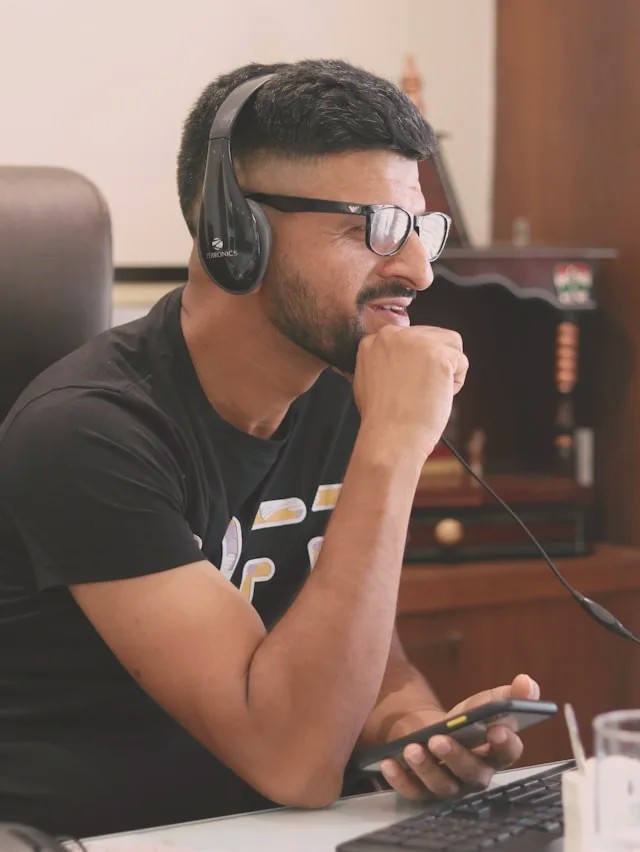
Product troubleshooting and escalation, answered by agents trained on your product.

The asynchronous channels, handled to the same standard as the phone queue.

At-risk contact, win-back and renewals, made by agents who know the account.

The processing work behind the contact: data entry, verification and admin.

Reporting on what your contacts are telling you, built where you want it.
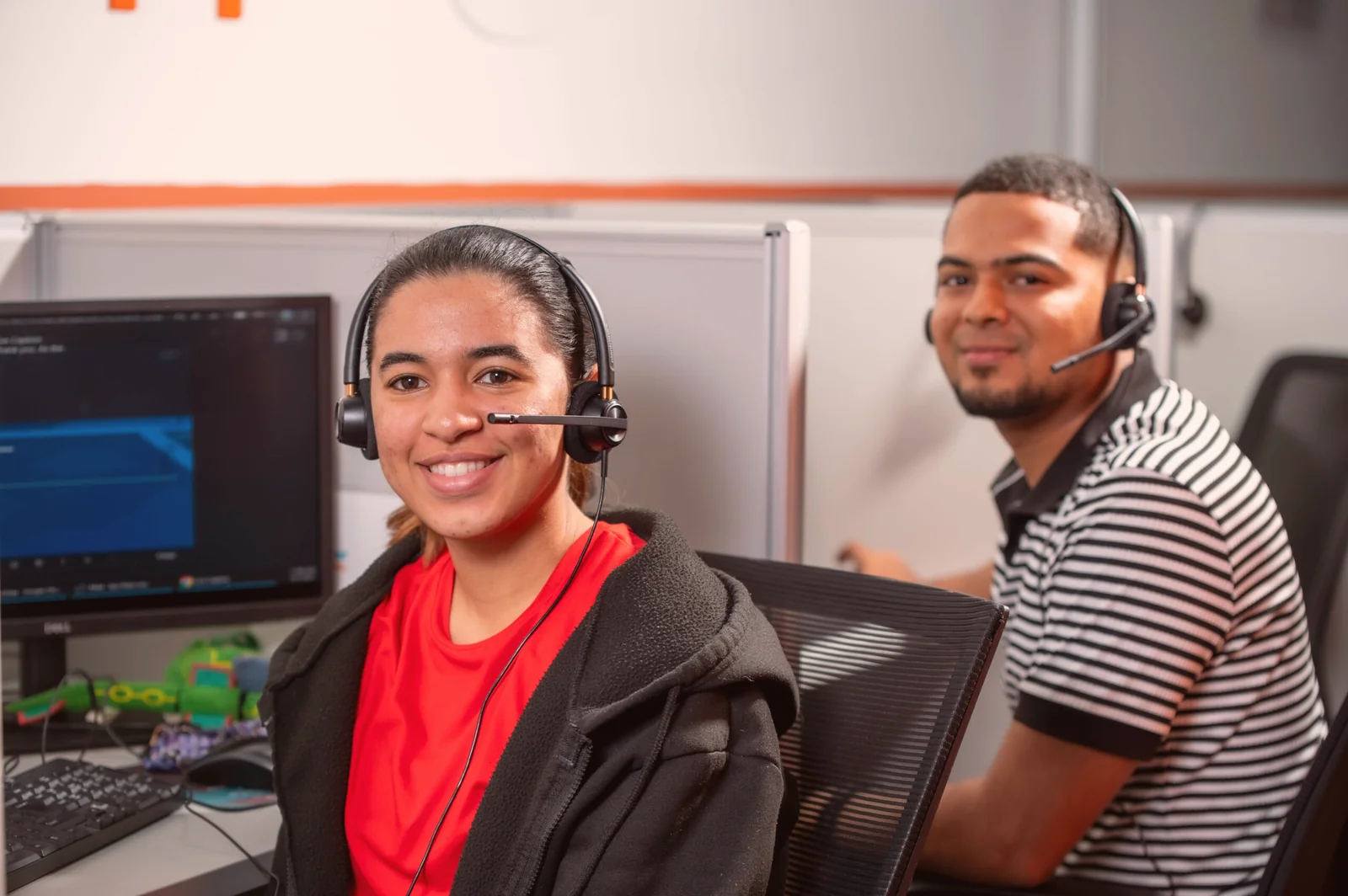
Bilingual support teams working your hours, for US companies that have outgrown what an in-house team can carry. Talk to us about what better looks like.
Customer experience outsourcing means handing the running of your customer-facing operation to an outside team, and holding that team to the measures you already report internally.
A conventional call center is accountable for hours covered and calls answered. A CX call center is accountable for whether the problem was resolved, and whether the customer stays.
We run those teams from the Dominican Republic in English and Spanish on US hours, and our staff in the Philippines, through a partnership there, cover evenings and weekends.


Customer service outsourcing answers a volume problem, and customer experience outsourcing answers a quality problem.
The volume problem sounds like calls going unanswered and a queue that keeps growing. Our customer service page covers that work.
The quality problem sounds like satisfaction slipping while every target still gets hit, and somebody upstairs asking why. This page is about the quality problem.
Quality pressure rarely breaks a target. Your reports go out on time and the numbers sit close enough to target that nobody looks underneath.
Underneath, a customer explains the problem on chat and explains it again on the phone the next day. An escalation waits overnight because the person who can approve the fix is asleep. All of it lands in one number you already report, which is first contact resolution.


Customer experience on an outsourced team is measured against the definitions you already use internally, agreed before launch and reported from the first month.
We agree each one in writing before anyone takes a call. First contact resolution can be counted per contact or per case, and the same month of work produces two different numbers.
We report resolution rate and satisfaction first, and handle time as the cost measure it is.
Omnichannel customer experience outsourcing is running voice, chat, email and social as one operation, where the customer’s history moves between those channels with them.
Whether it moves is a property of your systems. We map them during onboarding: which tool holds the record, which ones talk to each other, and where a handover drops the context. Where we find a gap we tell you before launch and write the escalation rules around it.
Your contact reasons add up to a picture of your product and your billing, once somebody reads them.
Every contact tells you something about your product or your billing, and it ends up as a disposition code nobody opens. We report the handful of reasons driving your volume, which of them can be fixed outside the contact center, and what changed after somebody fixed one.
Our data analytics and business intelligence team builds that reporting where you want it, and our customer experience insights page covers what goes into it.
Outsourced customer success is proactive work, and the part we run today is at-risk contact, win-back and renewals.
Customer support waits for the customer to get in touch. Customer success starts the contact: an agent notices the account has gone quiet, and calls. Our sales and retention page covers that work.
A named success manager owning a renewal number is a different engagement, scoped separately.
Ask who owns the rubric and whether you can add a line to it. You want the complaint you hear every week to be scored.
Two teams score the same call and compare. Ask how often, and what happens when they diverge.
Our answer: calls are scored against the standard agreed with you. When a metric moves you hear it from us, rather than finding it in the report.
Every operation has a bad month. Ask whether you hear it from the provider, or find it yourself.
Ask to see a real report from a month that went wrong. You want the paragraph that says why.
Our answer: quality monitoring runs to the COPC framework we are certified against, so the scoring is not invented for your account. You see the same scorecard we do.
Our teams are in Santiago, in the Dominican Republic. The working day overlaps yours, so a supervisor can join a call in your afternoon and an escalation does not wait until tomorrow.
VoiceTeam is headquartered in the Dominican Republic, with our facilities and the bulk of our teams there, and we hold a strategic partnership in the Philippines where we have our own staff on the ground. The Dominican Republic runs on Atlantic Standard Time with no daylight saving, so our day is level with or one hour ahead of US Eastern all year. Overnight cover comes from the Philippines side, on the same measures and the same scorecard.
Our Dominican Republic agents are bilingual in English and Spanish, and share enough US cultural reference that a complaint about a billing cycle needs no explaining. Coverage runs to your hours, up to 24/7.
We handle payment details under PCI DSS rules and health information under HIPAA. Access is limited to the agents assigned to your account. Ask for the specifics of your own regulatory regime on the first call.
VoiceTeam is COPC certified, and our operations meet SOC 2 Type 2 requirements. Agents work only in the systems you give them access to, and that access is removed when someone comes off your account. You set data retention before launch, and the controls are audited.
AI is part of every service we run. AI models sit behind the agent: they surface knowledge during a live contact, draft the summary afterwards and flag the contacts a supervisor should review.
As the customer explains the problem, AI models bring up the right knowledge article, so the agent answers without breaking off to search.
AI models draft the summary of each contact, so the agent spends the call listening to the customer instead of typing notes.
AI models flag the contacts a supervisor should review. We also combine automation with sentiment-based coaching for our agents.
Our own AI team and specialist AI partners build this layer, and it comes standard on every account we run.
During onboarding we look at which of your contact reasons a conversational AI could handle and which need an agent. Nothing moves without your sign-off.
A person handles every customer contact on our accounts, and the AI layer is there to help that person do the work well. In tech support, our AI-assisted support has reduced troubleshooting time by 40%. Each service page describes where the layer sits in that workflow, from ticket routing in tech support to speech analytics on retention calls.
We run the same measures in every sector. The queue is made of different things.
A CX engagement starts with a conversation about what you already measure and what you already know is wrong.
From there we scope a pilot on one queue or one shift, with the definitions agreed. We would rather agree a ramp you can defend than a fast one you have to explain later.
CX outsourcing is running your customer-facing operation with an external team that is held to the customer experience measures you already report internally, rather than to hours covered.
Customer service outsourcing answers a volume problem: who picks up the phone, on which channels, at what hours. Customer experience outsourcing answers a quality problem: how the operation is measured, governed and improved. Most engagements include both.
Cost depends on the hours you need covered, how specialized the work is, and how predictable your volume is. Work out your current cost per contact first, including recruitment, repeat training, supervisor time and the contacts you are not handling at all. Our cost of ownership calculator does it for your own operation.
Our teams are in Santiago, in the Dominican Republic, working US hours in English and Spanish. That is where our facilities and the bulk of our teams are, and we hold a strategic partnership in the Philippines where we have our own staff on the ground.
Yes. Coverage is set to your hours, including evenings and weekends, and up to 24/7 where the volume needs it. Overnight cover comes from our Philippines partnership, where we have our own staff on the ground.
Yes, through our Dominican Republic teams, who work in English and Spanish on US hours.
Omnichannel customer experience outsourcing is support across voice, chat, email and social where the customer’s history moves between channels with them. Whether it moves depends on your CRM, ticketing tool and telephony. We map those during onboarding and tell you before launch where a handover would drop the context.
Yes, for the proactive work: at-risk contact, win-back and renewals, run by agents who know the account. A named success manager owning a renewal number is a different engagement, scoped separately.
Measures agreed with you before launch, defined the way you define them internally, and reported monthly from the first month. Typically first contact resolution, customer satisfaction (CSAT), quality assurance scoring against your rubric, and handle time.
We handle payment details under PCI DSS rules and health information under HIPAA, and quality monitoring runs to the COPC framework we are certified against. Access is limited to the agents assigned to your account. If you are in a regulated sector, ask for the specifics early.

Bring us a month your report cannot explain. We will say where we would start.